The same gap, re-measured one rung at a time
Eighteen research surfaces, reorganised not by data source but by the ladder of a delegated act: does the act even exist on a record, under whose authority, with what oversight, and can a third party verify it? The same legibility gap is strong at the bottom and collapses at the top — with a hard floor where the actor is a machine.
The four-rung ladder
Each rung asks one question of a delegated act, and a different set of observatories answers it. The apparatus is strongest at the bottom (mature trust infrastructure) and weakest at the top (does the act exist at all).
How to read every claim
One grammar is reused on every surface. A headline is one sentence. A warrant names the observatory cell, the indicator, the count, and the test statistic. A bedrock is the primary record itself, carrying its evidence tier and a proof-ceiling label. Every headline number clicks down to a primary record.
one sentence
The finding, stated plainly and falsifiably.
cell + n + stat
Observatory cell, indicator, count and test statistic.
the primary record
The trusted-list entry, case, or watch-event — with its tier.
existence
does the act or agent exist on any record?The weakest rung. Most agentic acts leave no register entry at all; what we can count is the harm catalogue and the thin set of public registries. ai-legibility sits near 1.32.
Traces of AI systems across public records.
gaia.eatf.euWhere public-sector AI is (and is not) registered.
public-ai-registry.eatf.euAn atlas of 297 AI edge-case harms.
obscure-ai.eatf.euThe boundary cases that feed the catalogue.
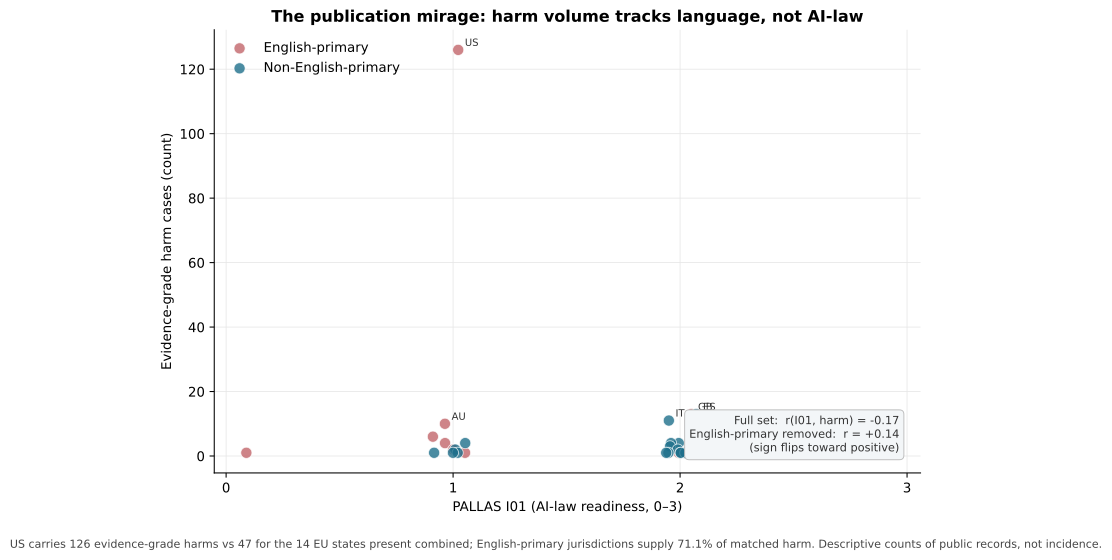
limen.eatf.euApparent US dominance of AI enforcement is a publication artefact: harm count tracks language family, not AI-law readiness (r = −0.17 overall; flips to +0.14 once English-primary jurisdictions are removed).
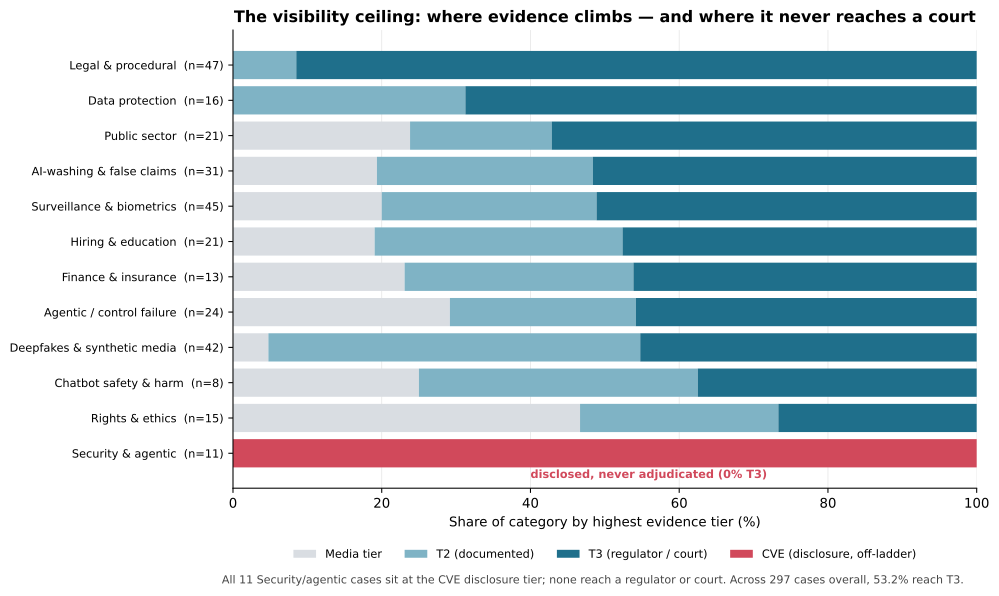
Evidence reaches a regulator or court (tier T3) in 53.2% of cases overall, but all 11 security and agentic cases stall at the CVE disclosure tier — 0% adjudicated: disclosed, never adjudicated.
authority
under whose authority does it act?Law and standards say who may act and on what basis; the crosswalk surfaces map AI-Act obligations onto the underlying primitives. This rung is still weak — duties are declared faster than the evidence that would discharge them.
Law and standards crosswalk for AI governance.
atlas.eatf.euAI-governance index, indicators I01 / I02 (AI-law, authority).
pallas.eatf.euCase law on AI use, including CLIO and NOMAD lines.
legal.eatf.euWho claims the primitives, by assignee and CPC class.
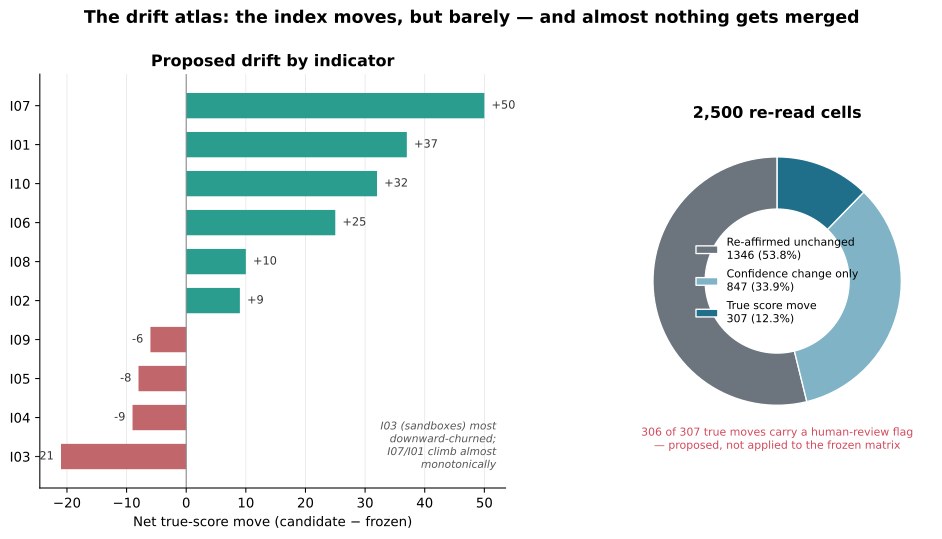
patent.eatf.euOf 2,500 re-read cells only 12.3% show a true score move (53.8% re-affirmed, 33.9% confidence-only); moves skew up, but 306 of 307 carry a human-review flag — proposed, not merged.
oversight
with what oversight is it run?Procurement signals and supervisory indicators (PALLAS I05 / I08) show oversight is mixed: declared in policy, uneven in practice, and rarely tied back to an attributable act.
Procurement and rights-holder oversight signals.
rhr.eatf.euAI-governance observability index across jurisdictions.
ai-observability.eatf.euScenario lab for agentic oversight and incident paths.
aion.eatf.euDated diffs that track when oversight rules change.
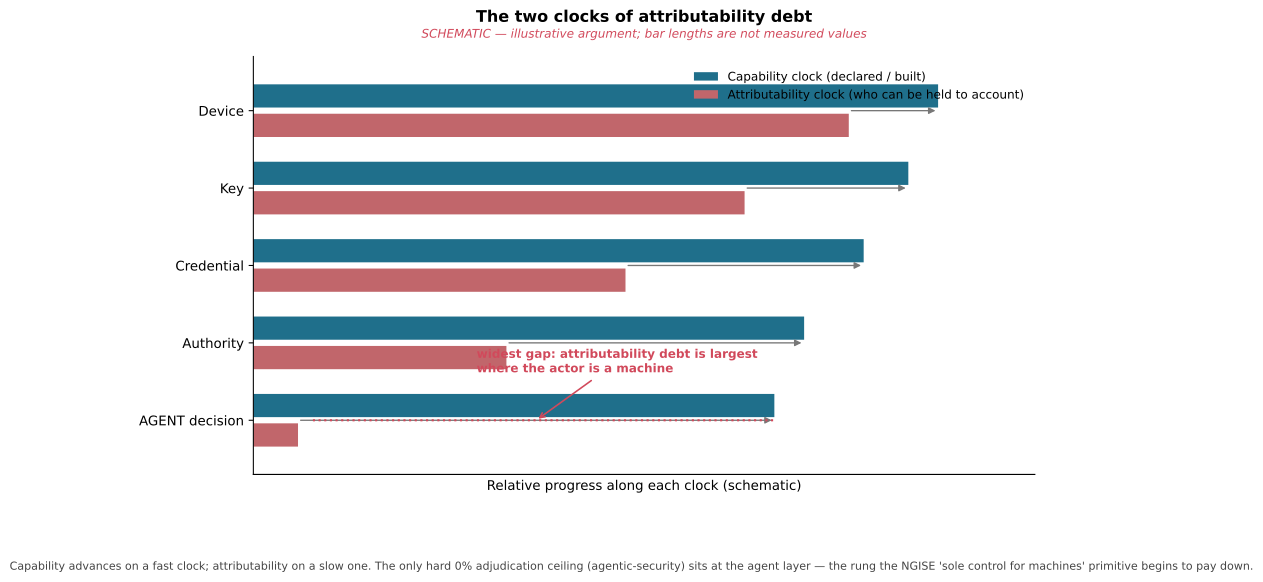
cassandra.eatf.euCapability advances on a fast clock and attributability on a slow one; the gap is widest at the agent-decision layer, the only rung with a hard 0% adjudication ceiling.
verifiability
can a third party verify it?The strongest rung. Mature trust infrastructure (remote signature-creation devices, attestation, sealing) lets a third party verify — apparatus near 2.76. But the strong rung is also the narrowest: delivery is acutely concentrated by jurisdiction.
EU remote signature-creation-device census and watch.
rqscd.eatf.euVerification and sealing of evidence records.
vesta.eatf.euDuty index — obligations that demand proof.
sigil.eatf.euReproducibility and attestation workbench.
factory.eatf.euThe verifiability ecosystem and its dependencies.
eco.eatf.euThe umbrella that hosts every surface.
eatf.euFlagship finding — click from headline to bedrock
1 headline
2 warrant — observatory cell, n, test stat
3 bedrock — the primary record
cross-check (EU level): European Commission trusted-list browser ↗.
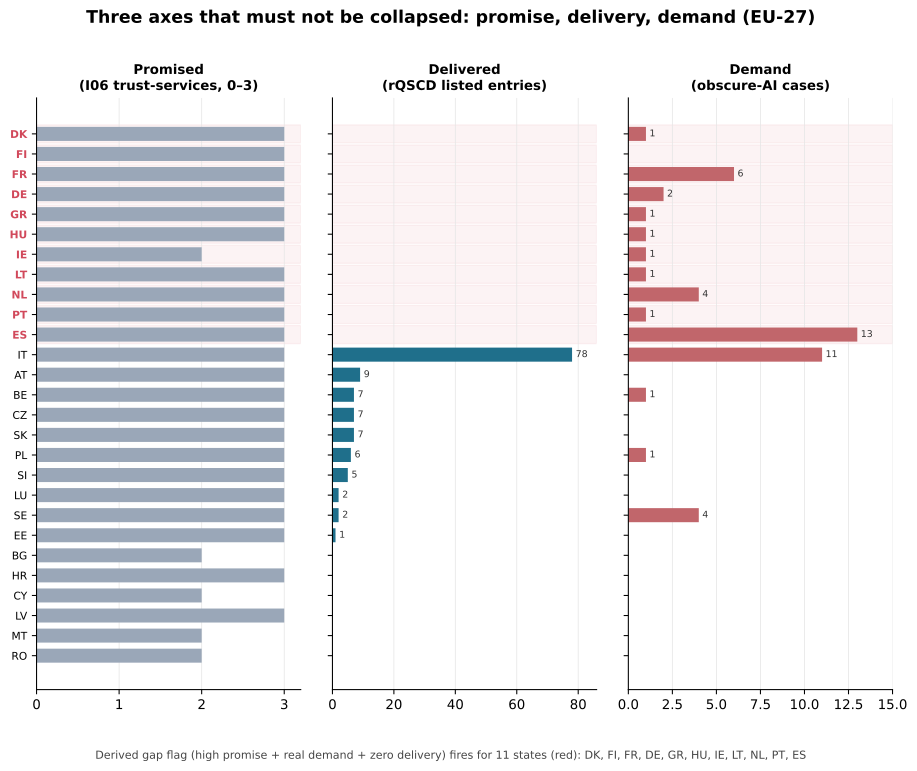
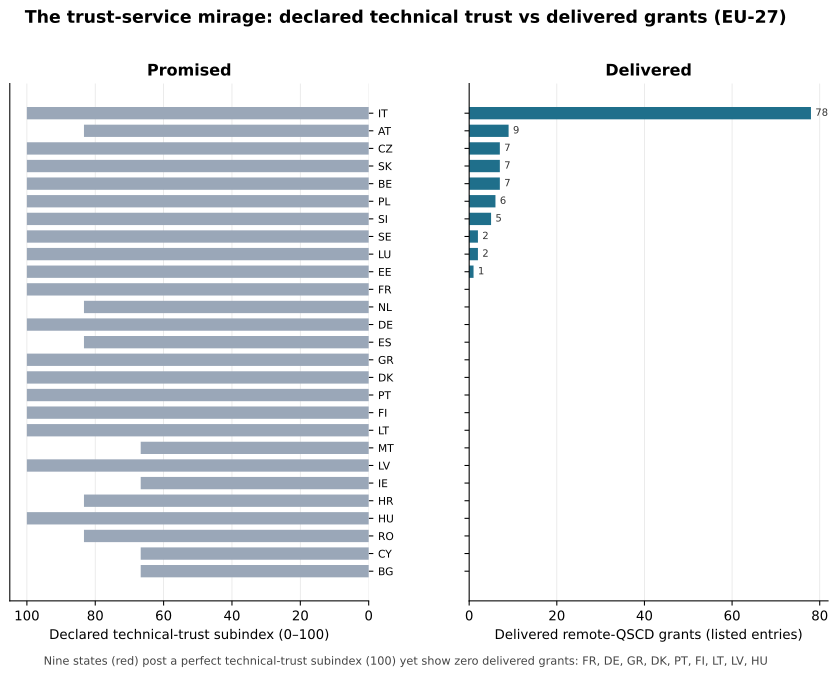
Nine EU states post a perfect technical-trust subindex (100) yet show zero delivered remote-QSCD grants — the score is the promise, the trusted list is the delivery, and they are not the same axis.
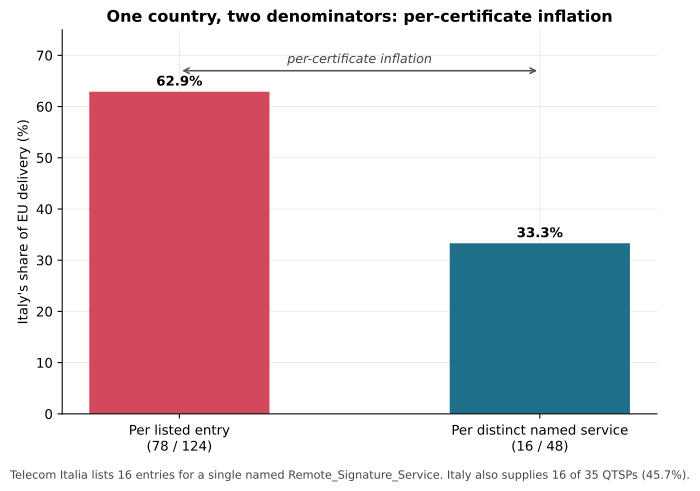
Italy's apparent dominance of delivery is a unit-of-analysis artefact: 62.9% per listed entry collapses to 33.3% per distinct named service (per-certificate inflation).
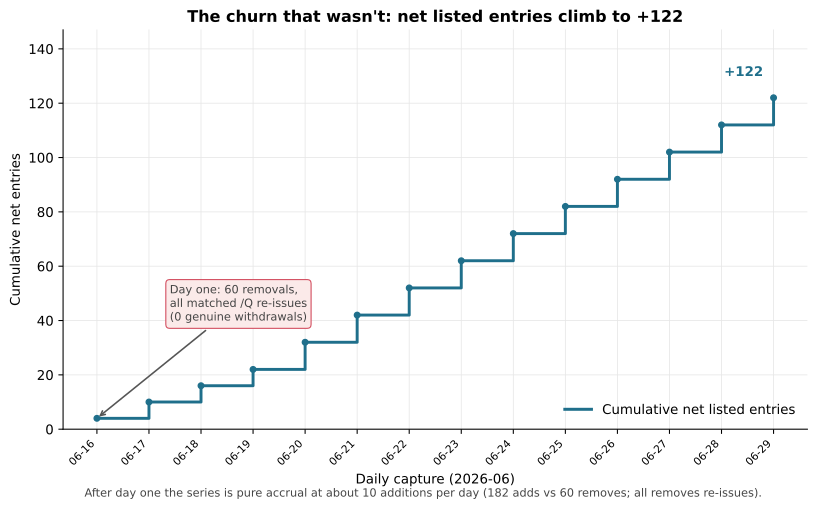
The churn is not gradual loss: all 60 day-one removals are matched re-issues (zero genuine withdrawals); after day one the series is pure accrual to +122 net entries.
Promise, delivery and demand are three separate axes: near-uniform promise (22 / 27 at max I06) coexists with delivery in only 10 states and real demand, firing a derived gap flag for 11 states.